
Phoenix metro
Pool Resurfacing Cost in Phoenix
Typical price ranges for Valley pools, what moves the number, and how to get an exact quote.
- Licensed & insured
- AZ ROC #[ROC NUMBER]
- Free on-site estimates
Most homeowners want a ballpark before they call anyone. That's fair. This guide covers typical price ranges for resurfacing and remodeling in the Phoenix area, what pushes a job toward the low or high end, and when a bigger project is worth the money.
Keep in mind that these are typical ranges, not quotes, and they depend on your pool's size and the finish you choose. The final price comes from a free on-site estimate, which Phoenix Pool Remodel can set up for you. All work is performed by [PARTNER NAME], licensed AZ ROC #[ROC NUMBER].
Typical ranges
Phoenix pool resurfacing prices at a glance
| Project | Typical range |
|---|---|
| Plaster resurfacing | About $6.5K–9K |
| Quartz resurfacing | Typically between plaster and pebble |
| Pebble resurfacing | About $10K–15K |
| Full remodel | About $35K–50K+ |
Typical ranges for Phoenix-area pools. Your price depends on pool size, finish and what the drained pool reveals. The final number comes from a free on-site estimate.
Typical price ranges
For a typical Valley pool, here's roughly where projects tend to land:
- Plaster resurfacing: typically about $6.5K to $9K, depending on pool size
- Quartz resurfacing: typically falls between plaster and pebble
- Pebble resurfacing: typically about $10K to $15K, depending on pool size and product
- Full remodel: typically about $35K to $50K or more, depending on scope
What drives the cost
Treat those ranges as starting points. Two pools with the same finish can land at quite different prices. A small, simple rectangle with good yard access is a very different job from a large freeform pool with a spa, several benches and a narrow side gate. The main factors:
- Size and surface area: bigger pools, deeper ends, and extra steps and benches mean more material and labor
- Finish: plaster costs the least, pebble the most, with quartz in between
- Tile and coping: replacing waterline tile or coping adds material and labor
- Chip-out vs bond coat: removing the old finish costs more than bonding over a finish that's still solid
- Repairs found after draining: cracks, hollow spots or plumbing issues sometimes only show up once the water is out
- Add-ons: lighting, a tanning ledge, water features or a spa all add to the total
- Access: narrow side yards or a long haul from the street to the pool can add labor
- Equipment: a new pump, filter or automation system is priced on top of the surface work
Chip-out or bond coat
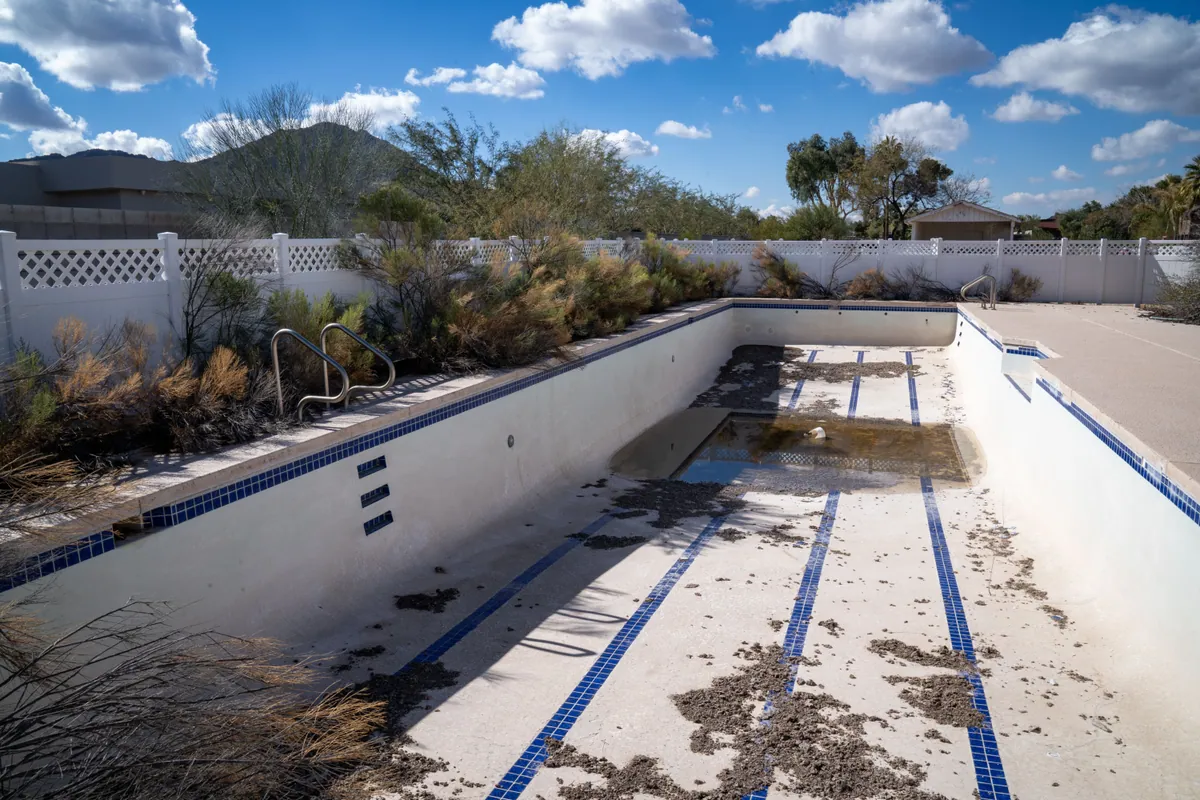
This single decision can swing the price noticeably. A bond coat goes over the existing finish when it's still firmly attached, which saves the labor of removing the old surface. When the old finish is delaminating, hollow, or has already been resurfaced a few times, it usually has to be chipped out down to a sound base.
The licensed contractor makes that call after inspecting the pool, and sometimes after draining it. It's one of the main reasons an online number can't replace an on-site visit.
When resurfacing makes financial sense
If the shell is sound, the tile and coping are in decent shape, and you mainly want a smooth, clean surface, resurfacing is usually the efficient choice. Plaster suits a shorter horizon, such as getting a house ready to sell, or a pool that doesn't get much use. Quartz and pebble cost more up front but often last longer, so the cost per year of use can come out similar or better if you're staying put.
When remodeling makes more sense
If the tile is cracked, the coping is failing, the deck is heaving and the pump is old, resurfacing alone leaves you with a new finish surrounded by worn-out parts. Replacing those one at a time over several years often costs more than doing them together while the pool is drained and the crew is already there. That's where a renovation or full remodel tends to earn its price.
A diving pool conversion or new features also fit best during a remodel, since they need the pool drained anyway. If you know you'll want a tanning ledge or LED lighting eventually, pricing them now alongside the finish usually gives you a clearer picture than adding them later.
Getting an exact price
The only way to get a real number is to have someone look at the pool. The free on-site estimate covers size, finish options, tile, coping, deck and equipment, and you'll get pricing for each option you're weighing. If you're torn between two paths, ask for both to be priced. Seeing a pebble resurfacing next to a Renovation package, for example, often makes the decision easier. There's no obligation. Request one online or call (480) 582-9971.
FAQ
Pool Resurfacing Cost: common questions
How much does it cost to resurface a pool in Phoenix?
Typical ranges are about $6.5K to $9K for plaster and about $10K to $15K for pebble, depending on pool size and finish. Quartz usually falls in between. Your final price comes from a free on-site estimate.
Why does pebble cost more than plaster?
The materials cost more and the application takes more labor. Pebble also tends to last longer, which offsets part of the difference over time.
Can the price change after the pool is drained?
Sometimes. Cracks, hollow areas or plumbing problems can show up once the water is out. If that happens, the licensed contractor explains the issue and your options before any extra work is done.
Is it cheaper to do tile and coping at the same time?
Usually it's more efficient, since the pool is already drained and some prep overlaps. Doing them later can mean paying for draining and prep twice.
What does a full remodel cost?
A full remodel typically runs about $35K to $50K or more, depending on pool size and on the deck, equipment and features included.
Ready to see what your pool could look like?
Free on-site estimate. Written price. No obligation.
All work performed by [PARTNER NAME], licensed AZ ROC #[ROC NUMBER], license class [B-5/KA-5].