
Phoenix metro
Pool Resurfacing in Phoenix
Plaster, quartz and pebble finishes for Valley pools, applied by a licensed contractor.
- Licensed & insured
- AZ ROC #[ROC NUMBER]
- Free on-site estimates
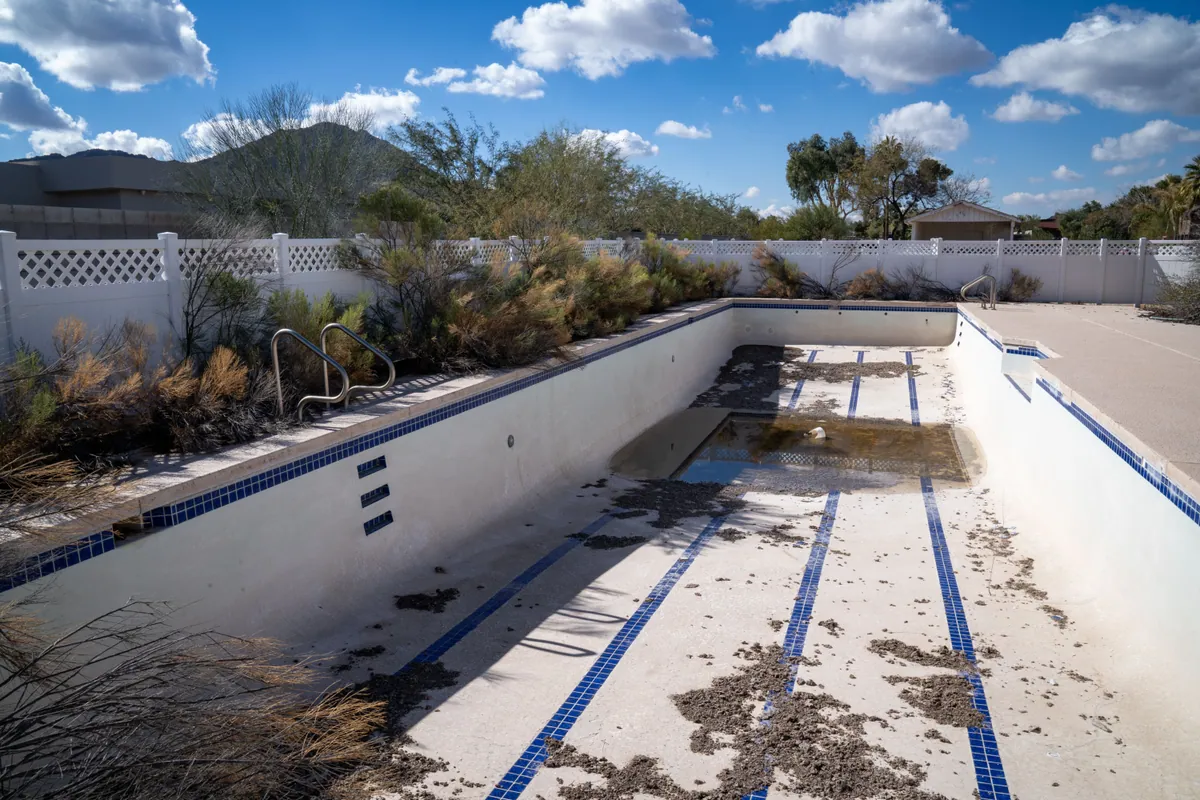
Pool finishes in the Phoenix area work hard. Hard water leaves calcium behind, summer highs over 110°F push up water temperature and evaporation, and strong UV fades color year after year. Eventually the surface gets rough on feet, stains stop scrubbing out, and the water never quite looks clear. That's when resurfacing comes up.
Phoenix Pool Remodel helps homeowners across the Valley figure out which finish fits their pool and budget, then sets up a free on-site estimate. The work itself is performed by [PARTNER NAME], licensed AZ ROC #[ROC NUMBER]. Below: the signs a pool is due, how the finishes compare, and how the process works.
Compare finishes
Plaster vs. quartz vs. pebble
| Finish | Look | Feel | Typical lifespan | Relative price |
|---|---|---|---|---|
| Plaster | Classic smooth white or light tint | Smoothest underfoot | About 5–10 years | $ |
| Quartz | Richer color, subtle sparkle | Smooth, slightly textured | About 10–15 years | $$ |
| Pebble | Natural stone, deep water color | Textured, massaging | About 15–20+ years | $$$ |
Lifespans are typical in Phoenix conditions and depend on water chemistry and care.
Signs your pool needs resurfacing
- Rough, etched plaster that snags swimsuits or scrapes feet
- Stains, blotches or a gray-green cast that brushing won’t fix
- White calcium nodules or crusty scale lines
- Hollow-sounding or peeling (delaminating) spots
- Chalky water and a surface that feels like sandpaper
- Dark gunite showing through worn areas
Signs your pool needs resurfacing
Finishes rarely fail all at once. They wear in ways that are easy to live with for a season or two, until they aren't. Watch for:
- Rough or etched plaster that snags swimsuits or scrapes toes and knees
- Stains that come back after brushing or an acid wash, often from metals or leaves
- Calcium nodules, the small crusty bumps that form where water pushes through the finish
- Delamination or hollow spots, where the finish sounds hollow when tapped or peels away in flakes
- Chalky water, or a white film on your hand after touching the walls
- Visible gunite, the gray shell showing through worn plaster on steps and benches
- Cracks in the finish, from fine surface checking to wider cracks that may point to shell movement
Plaster: the classic white finish
Traditional white plaster is a mix of white cement and marble dust. It gives water the bright, light blue look many people picture when they think of a backyard pool, and it's the most affordable finish to apply. When it's new, it's smooth underfoot.
The tradeoff is durability. Plaster is the most porous of the three, so it stains and etches more easily, and Phoenix water chemistry is tough on it. Plaster often lasts around 5 to 10 years here, depending largely on how well the water is kept in balance.
Quartz: a sturdier middle ground
Quartz finishes add crushed quartz aggregate to the plaster mix. Quartz is harder and less porous than marble dust, so the surface usually holds up better against stains, etching and chemical swings. It comes in a range of colors, from light blues to deeper tones, and it still feels fairly smooth.
Quartz typically costs more than plaster and less than pebble. For a lot of homeowners it's the sensible step up: more life out of the surface without the higher price or textured feel of pebble. Quartz often lasts somewhere around 10 to 15 years with good care, though results vary from pool to pool.
Pebble: the longest-lasting option
Pebble finishes use small, smooth stones set in cement, then exposed so the stones sit at the surface. The result is a natural, textured look with color that tends to hold up well to sun and chemicals. It's the most durable of the common finishes, and many pebble surfaces last 15 years or more when the water is well cared for.
Pebble does feel textured underfoot. Some people like that, and some prefer something smoother, which is why mini pebble and polished pebble products exist. It also costs the most up front, so it's worth weighing against how long you plan to stay in the home.
What the resurfacing process looks like
Here's how [PARTNER NAME]'s crews typically approach a resurfacing job:
- Drain: the pool is fully drained, following local discharge rules.
- Prep: the old surface is either chipped out down to a sound base or, when the existing finish is solid enough, roughened and covered with a bond coat so the new material grips. Cracks and loose areas are repaired at this stage.
- Apply: the new plaster, quartz or pebble finish is troweled on, then finished. Pebble gets washed or acid treated to expose the stones.
- Start-up and curing: the pool is refilled and the water chemistry is brought into balance gradually over the following days and weeks. Regular brushing during this period helps the finish cure evenly.
How to choose between finishes
Start with how long you plan to keep the pool and how you want the surface to feel. If you're getting ready to sell in a few years, plaster may make the most sense. If this is the house you're staying in, the longer life of quartz or pebble often evens out the higher upfront cost. Darker colors tend to hide minor staining; lighter ones give that bright blue.
A drained pool sometimes reveals problems that weren't visible under water, like shell cracks or hollow areas, and the licensed contractor will walk you through options before going further. The free on-site estimate prices each finish side by side, so you can decide with real numbers in hand.
FAQ
Pool Resurfacing: common questions
How do I know if my pool needs resurfacing or just a repair?
Isolated chips or a small hollow spot can often be patched. When roughness, staining and delamination show up across large areas, patches tend to be temporary. An on-site look is the easiest way to tell the difference.
How long does plaster last in Phoenix?
Plaster often lasts around 5 to 10 years here. Hard water, summer heat and chemistry swings all shorten its life, while steady water balance helps it last longer.
Does the pool have to be drained?
Yes. Resurfacing needs a fully drained pool so the old surface can be prepped and the new finish applied. Draining is handled as part of the job.
Is quartz worth the extra cost over plaster?
For many homeowners it is, because quartz usually resists staining and etching better and lasts longer. It depends on your budget and how long you'll own the pool. The estimate shows both prices so you can compare.
Who actually does the work?
All resurfacing is performed by [PARTNER NAME], licensed AZ ROC #[ROC NUMBER]. Phoenix Pool Remodel answers your questions and sets up the free estimate.
Pool Resurfacing by city
Ready to see what your pool could look like?
Free on-site estimate. Written price. No obligation.
All work performed by [PARTNER NAME], licensed AZ ROC #[ROC NUMBER], license class [B-5/KA-5].